
-
Anne Chevalier
SKU: INL2601 -
Bernadette Lafont
SKU: INL2602 -
Colette Marchand
SKU: INL2603 -
Elina Labourdette
SKU: INL2604 -
Gina Manès
SKU: INL2605 -
Ginette Leclerc
SKU: INL2606 -
Héléna Manson
SKU: INL2607 -
Jacqueline Laurent
SKU: INL2608 -
Juliette Mayniel
SKU: INL2609 -
Lise Delamare
SKU: INL2610 -
Maria Falconetti
SKU: INL2611 -
Marina Vlady
SKU: INL2612 -
Martine Carol
SKU: INL2613 -
Michèle Moretti
SKU: INL2614 -
Nicole Stéphane
SKU: INL2615 -
Odette Talazac
SKU: INL2616 -
Paulette Dubost
SKU: INL2617 -
Simone Mareuil
SKU: INL2618 -
Suzanne Flon
SKU: INL2619 -
Sylvia Bataille
SKU: INL2620

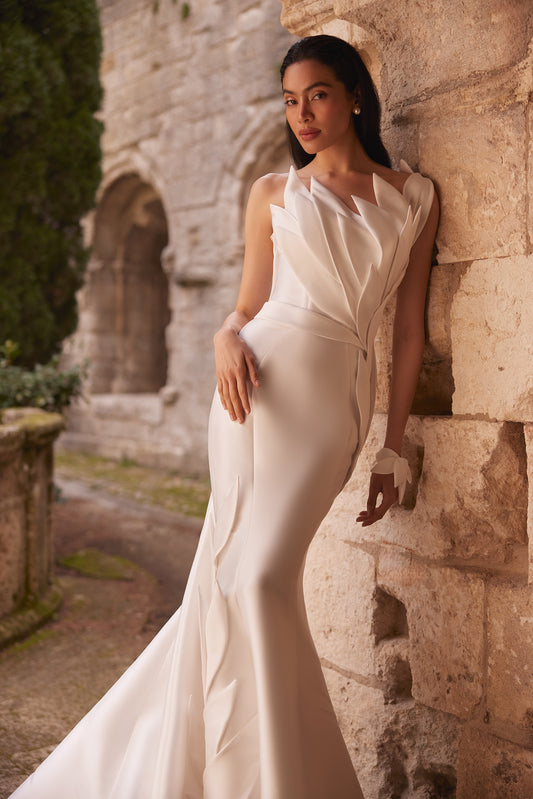

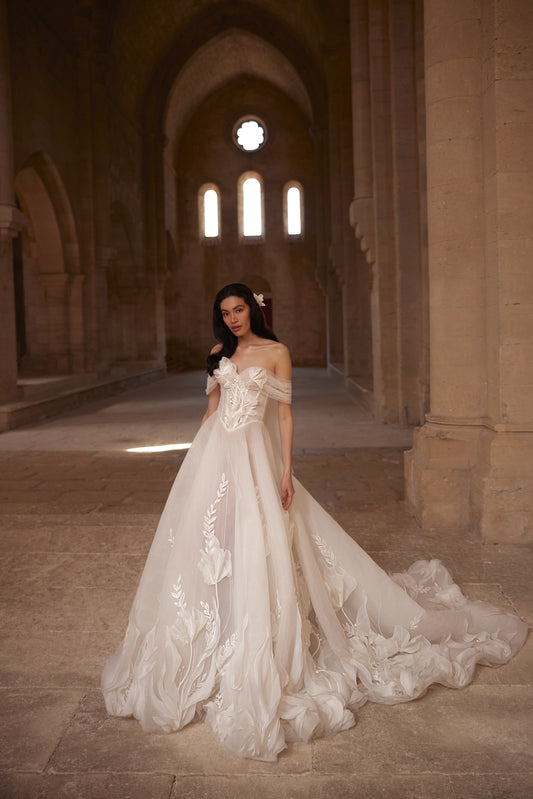

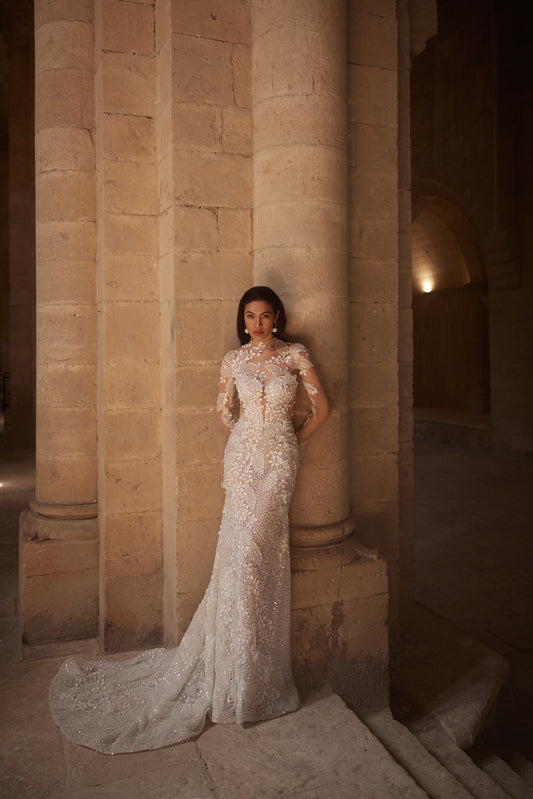

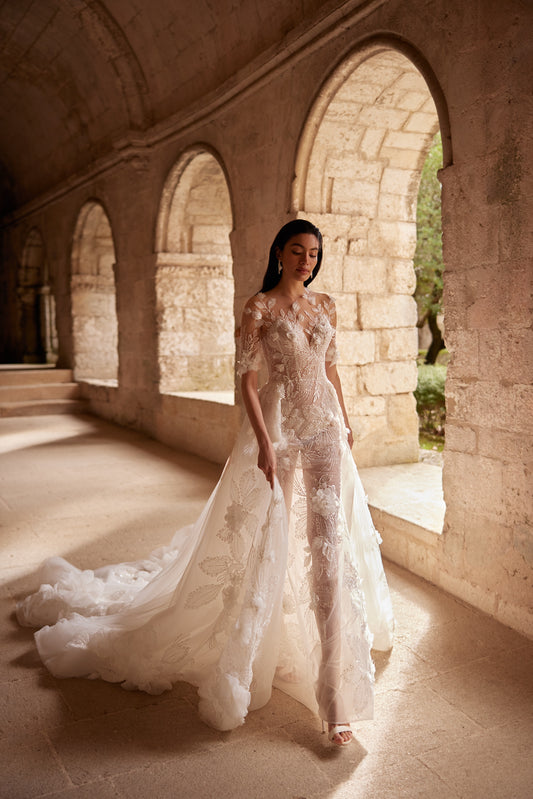

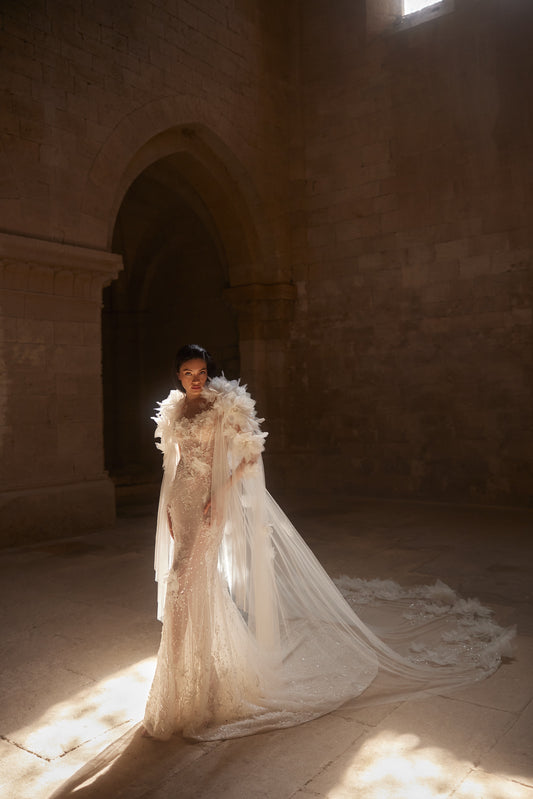

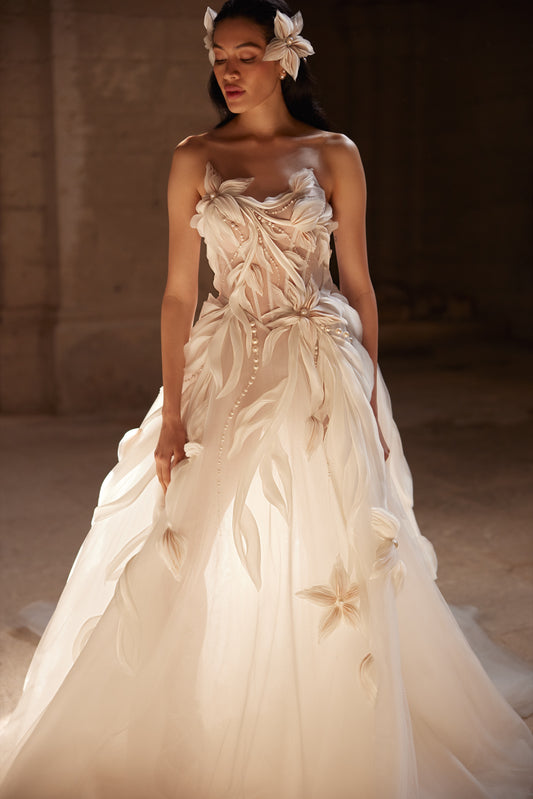

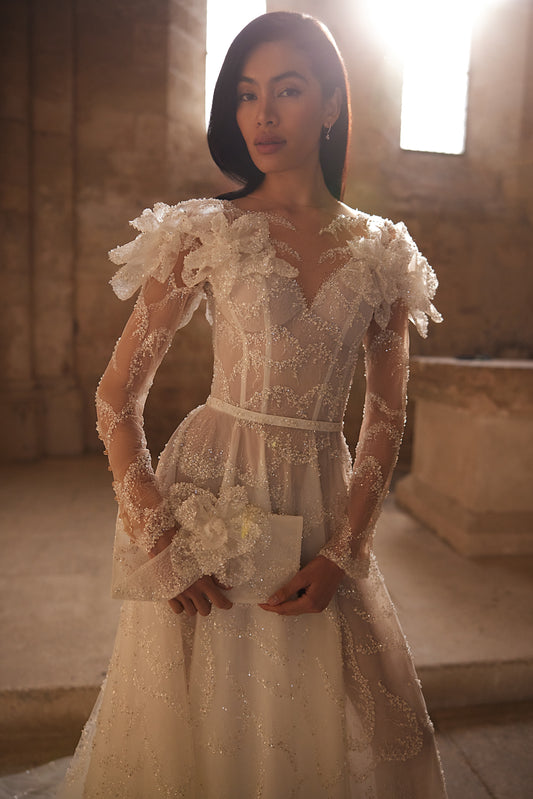

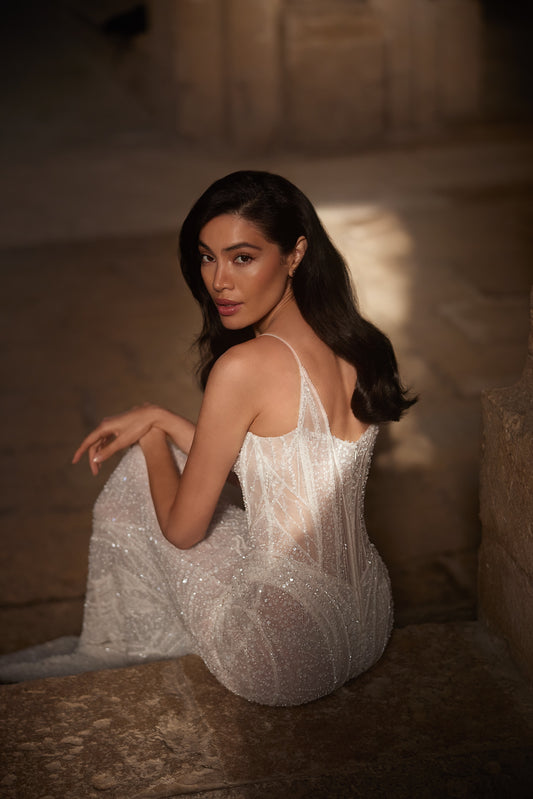

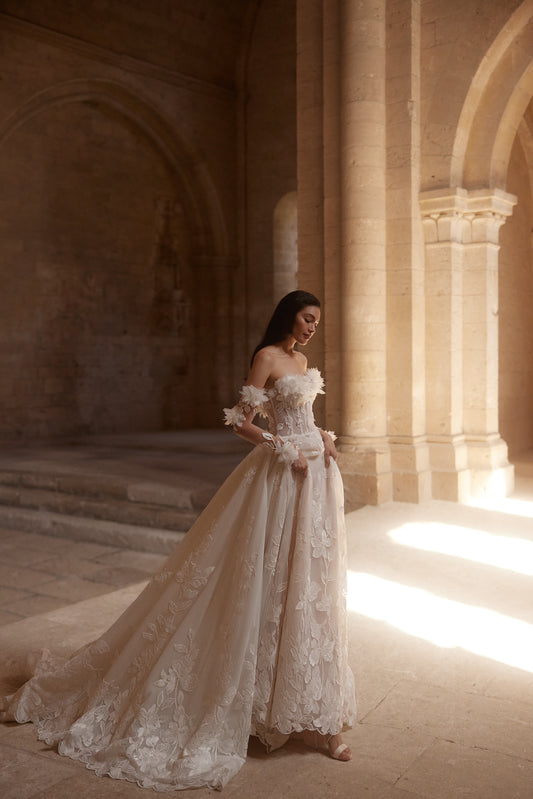

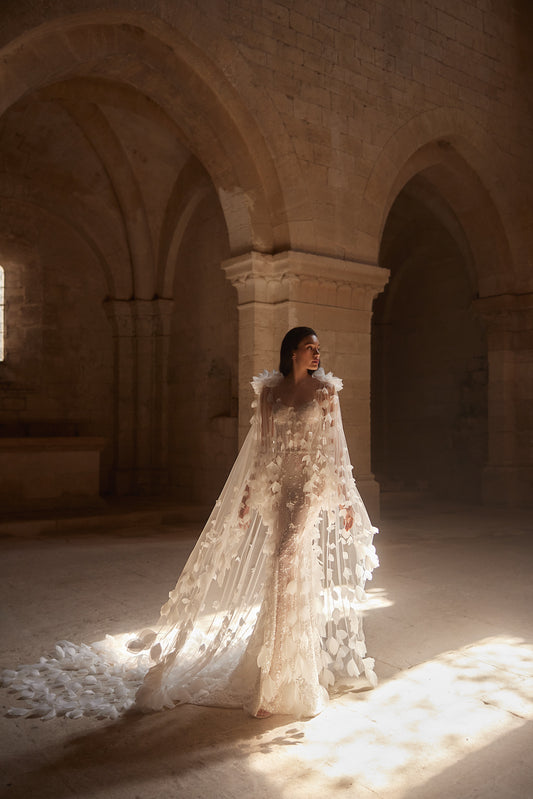

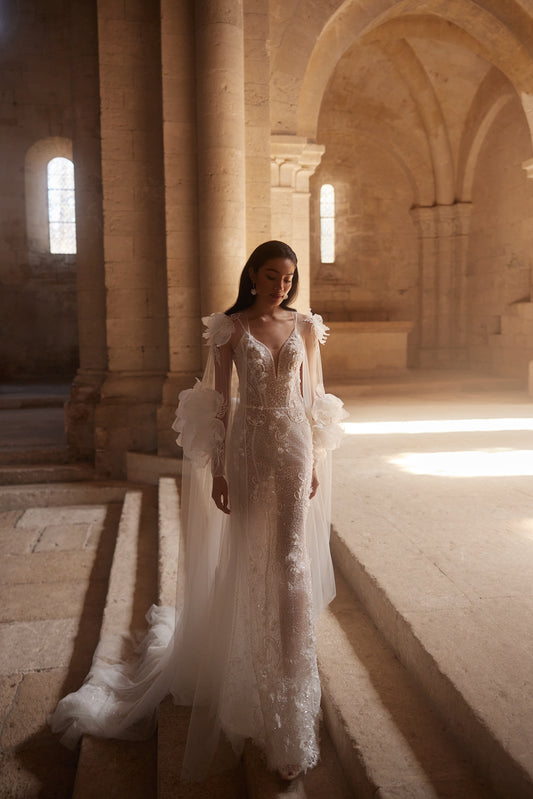

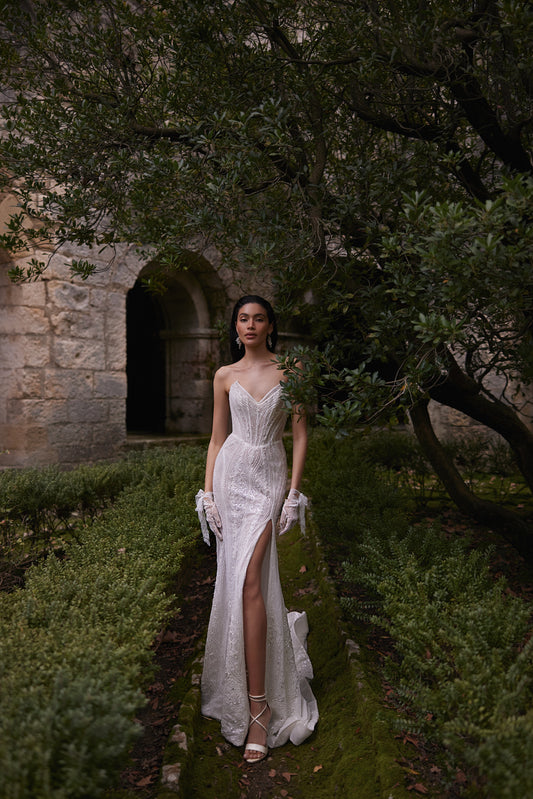

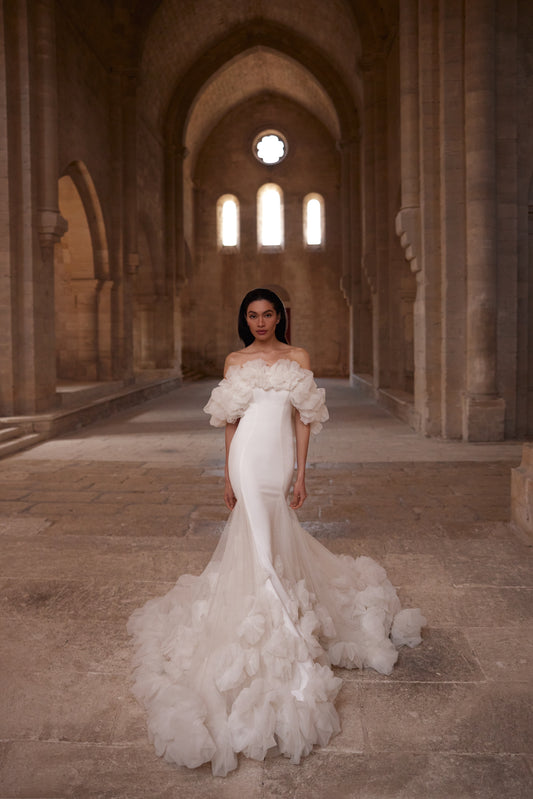

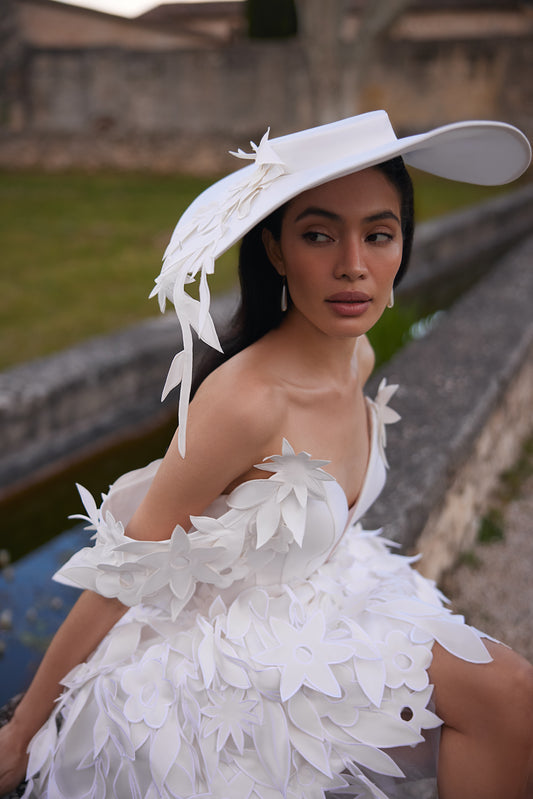

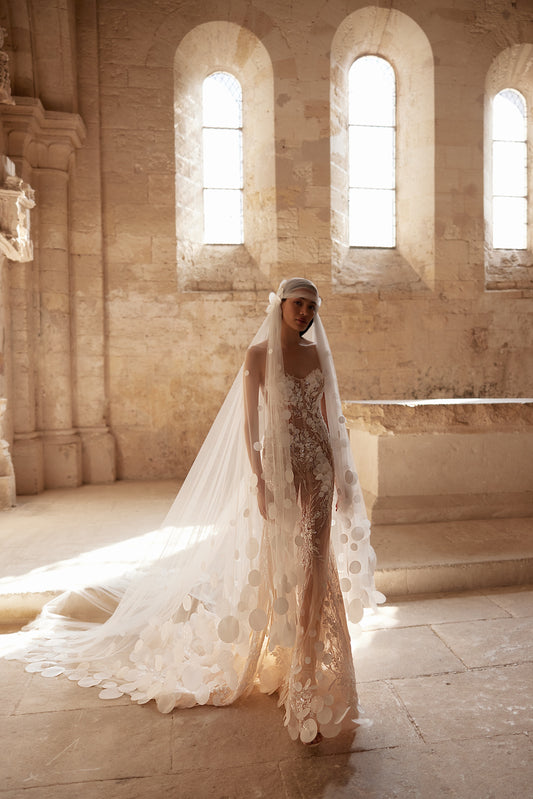

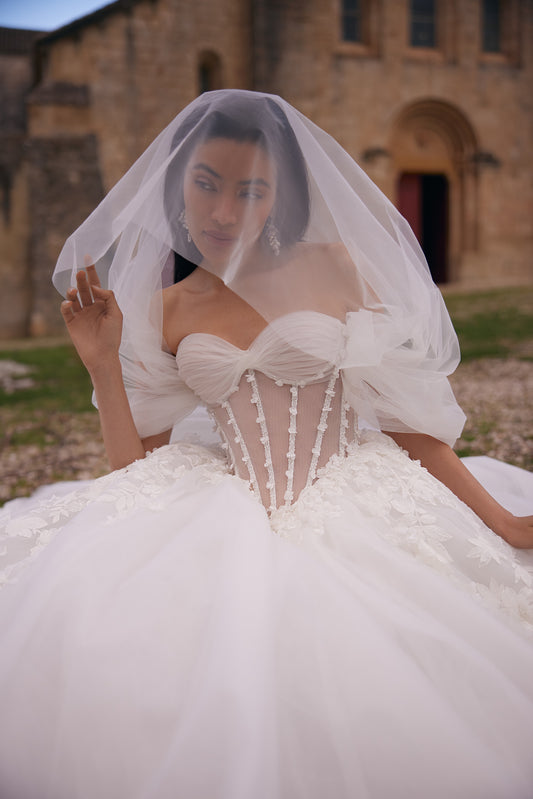

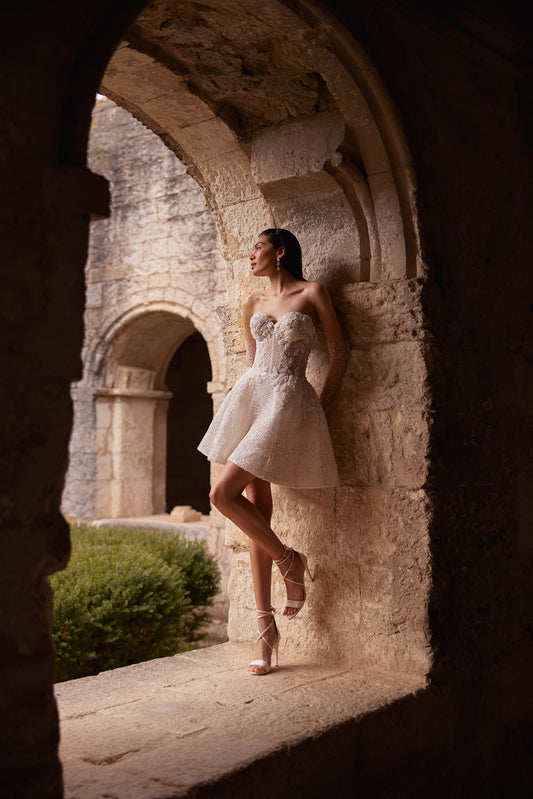

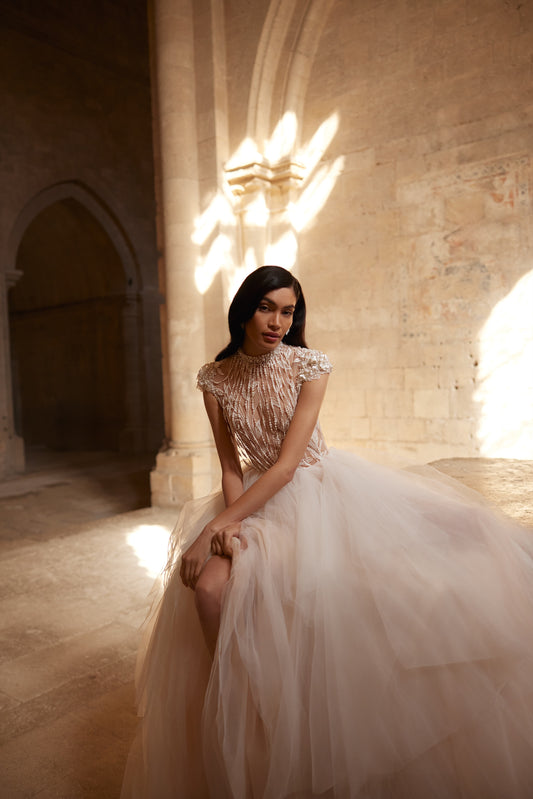

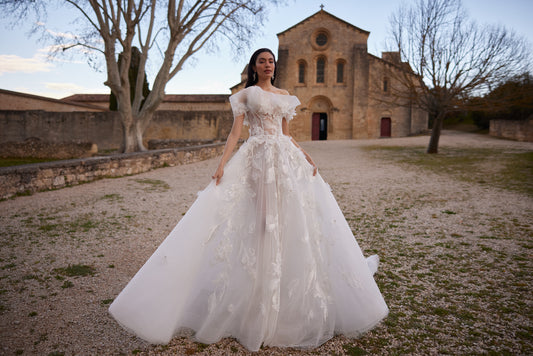

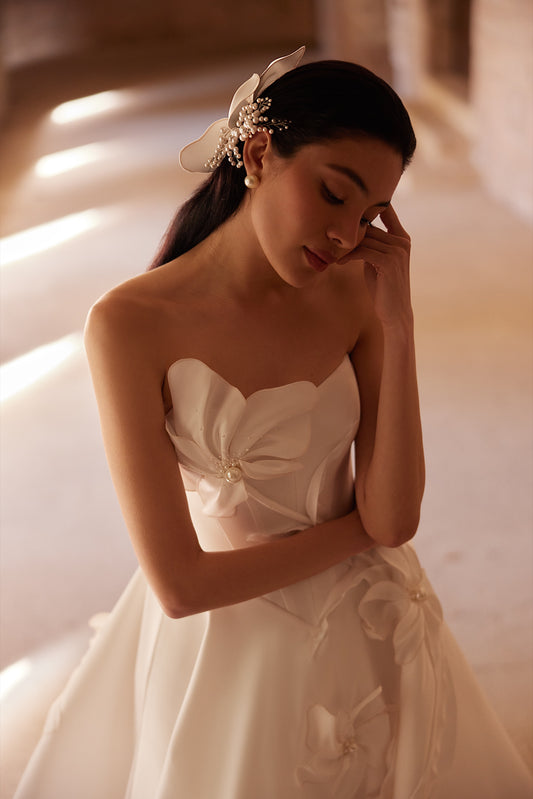
Temple de l'âme is the most interior collection in our house. Where other Innocentia lines reach outward — toward the lens, the room, the long aisle — this one turns inward. It was conceived as a quiet space inside the wardrobe, a set of garments built for the kind of bride who chooses her dress the way she chooses a book she will return to: slowly, alone, and more than once.
The collection takes its name without translating it. Temple de l'âme stays in its original phrasing because the meaning travels — a sanctuary, a place set apart, a body understood as something worth dressing with care. We resisted naming it anything more literal. The mood is ambient rather than descriptive, and the dresses inside it follow the same rule.
Material and craft
Each gown in Temple de l'âme is constructed in our atelier in Chernivtsi, where Innocentia has worked since 2013. The combination here is consistent across the collection: French lace laid against Italian satin, the two materials chosen for how they behave when stitched by hand rather than how they photograph on a hanger. Lace gives the surface its quiet noise — small irregularities, the slight asymmetry of a leaf or a vine repeated by a human hand. Satin gives the silhouette its weight.
The embroidery is done in-house. Beadwork, appliqué, and the floral motifs that recur through the collection are placed by the same team that drafts the patterns, which is why the ornament always sits with the seam rather than fighting it. Nothing in Temple de l'âme is printed, transferred, or applied at scale. Each piece carries the small evidence of having been made slowly.
A different silhouette philosophy
Temple de l'âme is the conceptual counterpart to Mont Blanc, our line of clean architecture and sculptural simplicity. Where Mont Blanc reduces, Temple de l'âme layers. Where Mont Blanc holds its line, Temple de l'âme breathes. The collection moves toward soft volumes, illusion necklines, sleeves that fall rather than stand, and skirts that gather light unevenly.
It is, in that sense, a performance-inspired collection — built for women who treat the wedding day as a slow act rather than a stage. The pacing of the gowns reflects this. Nothing here is engineered for the entrance alone.
Names as a reading list
Each dress in the collection carries the name of a performer whose work shifted the texture of what cinema could feel like. We chose them not as references to a country or a movement, but as a reading list — women whose presence on screen rewrote the register of intimacy, restraint, and unguarded expression. The names sit on the labels the way a dedication sits on a book: quiet, optional to notice, meaningful if you do.
Bernadette, among others in the line, is named for an actress who reshaped what cinema could feel like in close-up. The naming is not biographical. It is a way of telling the bride which emotional register the dress belongs to before she has tried it on.
Transformable construction, used softly
Transformable construction is an Innocentia signature, and Temple de l'âme uses it with restraint. Detachable sleeves, removable overskirts, and convertible necklines are present, but the second silhouette is rarely louder than the first — it is quieter. A long sleeve comes away to reveal a bare shoulder. An embroidered overlay lifts off to leave a slip-clean satin column. The collection's logic of transformation is intimacy, not theatre: the second look is for the part of the evening when fewer people are watching.
Who it is for
Temple de l'âme is for the bride who is not interested in being seen for the first time at a distance. It belongs to small ceremonies, long dinners, second receptions, slower-paced celebrations, and the brides who wanted something built for those rooms rather than for the staircase. Twenty gowns are currently in the collection, each available through our 46 boutique partners across 22 countries.